Twitch

Channel Tags

Helping viewers discover new streamers through trusted recommendations

Twitch streamers frequently recommend other creators during live broadcasts, but viewers had no easy way to learn more about those channels without interrupting their viewing experience.

I designed Channel Tags, a lightweight discovery experience that allowed viewers to evaluate and follow recommended creators directly from the stream.

Understanding Channel Discovery

To better understand how viewers discover new streamers, I investigated the pathways users took when moving between channels on Twitch. I reviewed existing research, analyzed community discussions, and spent time observing streamers and viewers during live broadcasts.

One behavior appeared repeatedly: streamers frequently recommended other creators to their audience. Sometimes these recommendations happened organically during conversation. Other times they were made through raids, shout-outs, or direct links shared in chat. Viewers clearly trusted these recommendations because they came from creators they already chose to follow.

However, the experience broke down when viewers wanted to learn more about the recommended channel. The only option was to leave the stream and visit the creator’s page directly. This forced viewers to interrupt the experience they were currently enjoying just to answer a simple question:

“Is this channel worth checking out?”

Key Findings

Discovery is driven by trust

Viewers were far more likely to investigate creators recommended by streamers they already followed than creators surfaced through generic recommendations.

Viewers needed more context

A channel name alone wasn’t enough to determine whether a creator matched their interests. Viewers wanted to quickly understand what kind of content a streamer produced before deciding to follow or visit their channel.

Leaving the stream is disruptive

Discovering a new creator required navigating away from the current broadcast, creating a decision point where many viewers simply chose not to investigate further.

These findings revealed an opportunity to support an existing community behavior rather than create a new one. Streamers were already helping audiences discover creators. The challenge was making those recommendations easier for viewers to evaluate and act on.
Framing the Opportunity

The research revealed that Twitch didn’t have a recommendation problem—it had an evaluation problem.

Streamers were already helping viewers discover new creators through raids, shout-outs, and direct recommendations. The challenge was that viewers lacked the information they needed to decide whether a recommended channel was worth exploring.

At the same time, any solution needed to respect the live viewing experience. Asking viewers to navigate away from the stream created friction and reduced the likelihood that they would investigate recommended creators.

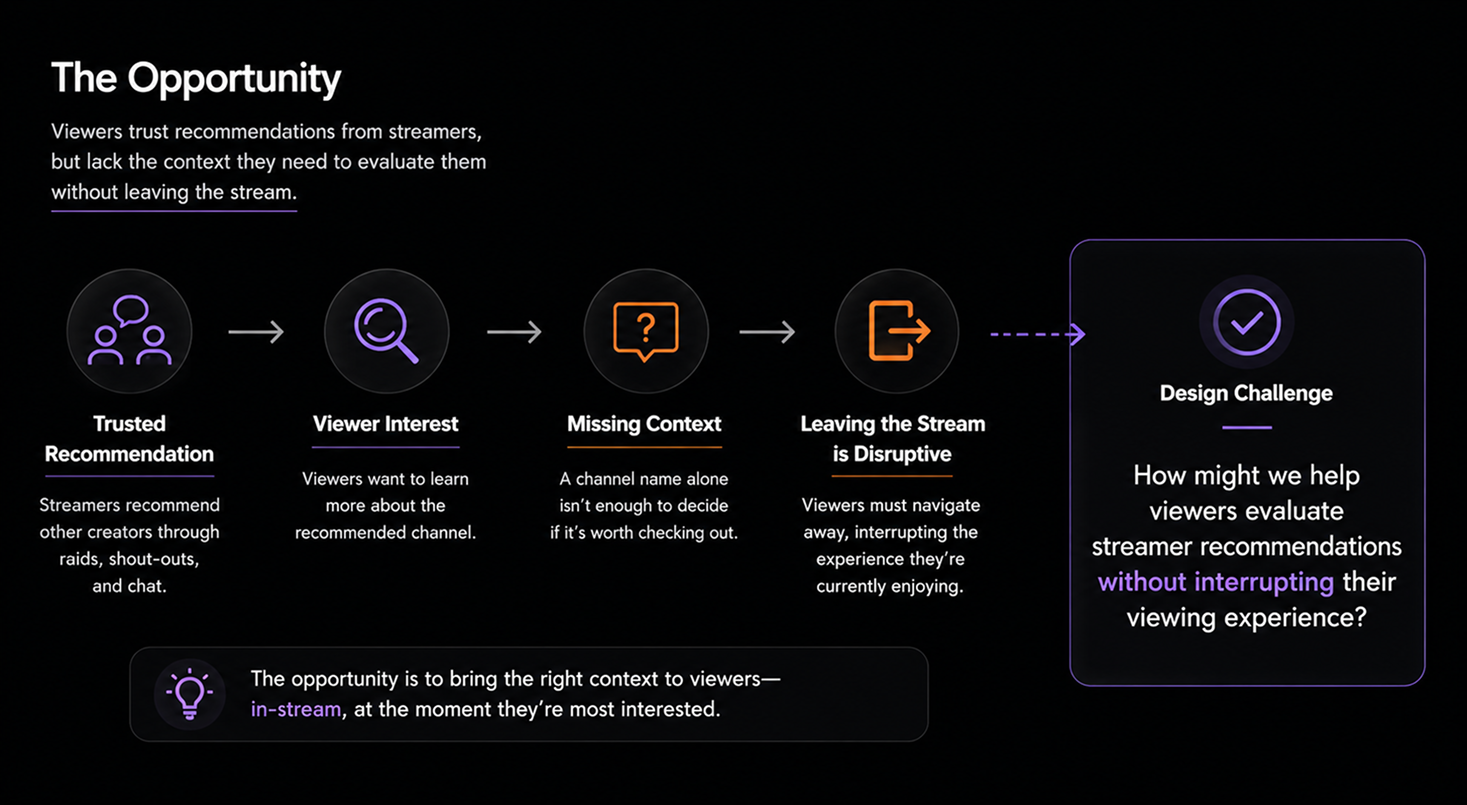
This led to the following design challenge:

Diagram framing the opportunity, mapping the viewer journey from a streamer recommendation to a design challenge.
The Opportunity — mapping the recommendation journey to the design challenge

“How might we help viewers evaluate streamer recommendations without interrupting their viewing experience?”

By focusing on evaluation rather than discovery, I identified an opportunity to support an existing community behavior and make it easier for viewers to confidently explore new creators.

Evaluating Potential Solutions

With the problem clearly defined, I explored several approaches for helping viewers learn more about recommended creators.

The core challenge was balancing two competing needs: providing enough information for viewers to evaluate a channel while minimizing disruption to the live viewing experience.

Some concepts focused on richer channel previews that provided detailed information about a creator and their content. Others emphasized speed and simplicity, allowing viewers to quickly follow a recommended channel with minimal interaction.

As I evaluated these approaches, a consistent tradeoff emerged. Richer experiences provided more context but required greater attention and screen space. Simpler solutions reduced friction but often failed to answer the viewer’s most important question:

“Is this channel worth checking out?”

The most promising direction was a lightweight hover experience that surfaced key information about a recommended creator directly within the stream. This approach gave viewers the context they needed to make a decision while allowing them to remain focused on the content they were already watching.

With a clear direction established, I began prototyping and testing variations of the hover card experience.

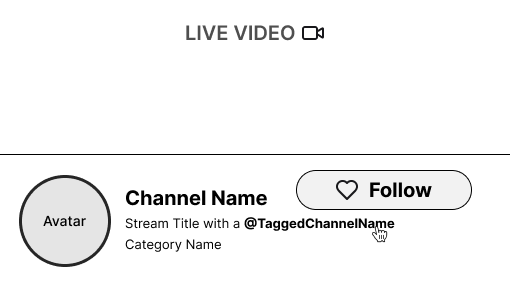
Concept A wireframe: a quick follow control overlaid on the live video with minimal channel information.
Concept A: Quick Follow — Pros: Low friction · Cons: Minimal information
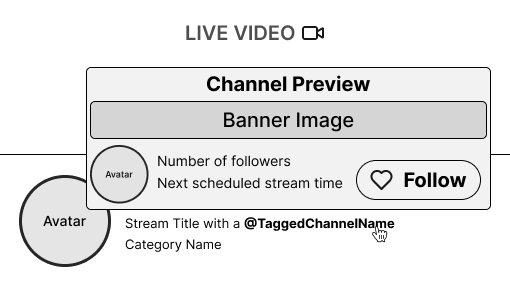
Concept B wireframe: a rich channel preview with banner, avatar, follower count, and schedule.
Concept B: Rich Channel Preview — Pros: Lots of information · Cons: Too distracting
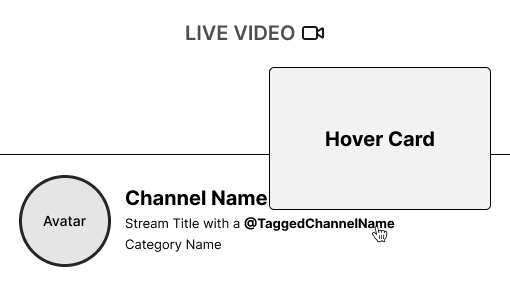
Concept C wireframe: a balanced hover card showing channel name, avatar, and category.
Concept C: Hover Card — Pros: Balanced context and simplicity · Cons: Requires hover interaction

Designing a Lightweight Discovery Experience

The success of Channel Tags depended on providing enough information for viewers to evaluate a creator without overwhelming the viewing experience.

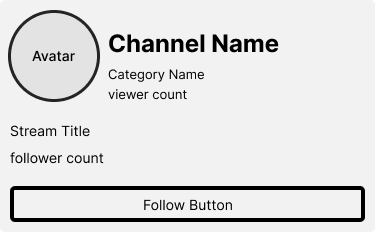
Early prototypes explored different levels of channel information, ranging from simple creator identification to richer previews that included imagery, descriptions, and calls to action. While detailed previews gave viewers more context, they also competed for attention with the live stream itself.

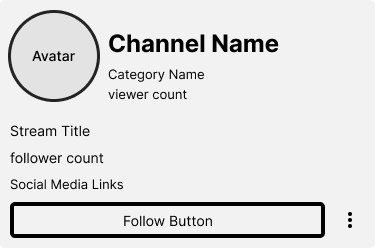
Prototype wireframe showing the minimum channel info: channel name, avatar, category, and follow button.
Minimum channel info
Prototype wireframe adding social media links to the channel hover card.
Add social media links
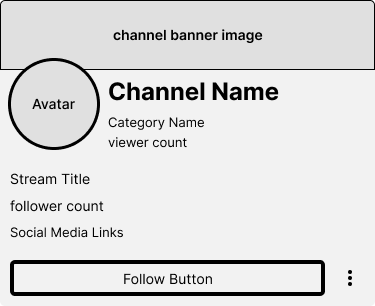
Prototype wireframe adding a channel banner image to the hover card.
Add channel banner image

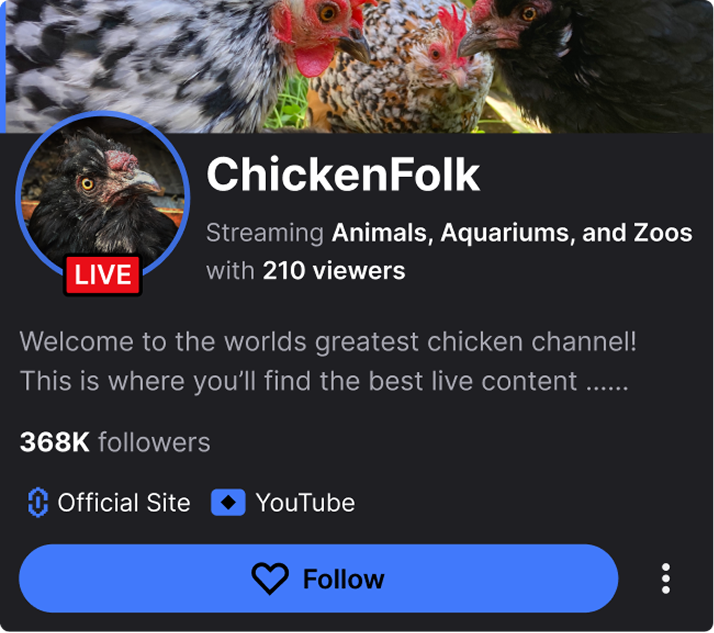
Through iteration, I focused on identifying the minimum amount of information needed to help viewers make an informed decision. The final design centered around a hover card that surfaced key details about the creator, including their channel name, profile image, category, and a direct follow action.

Final hover card design showing the ChickenFolk channel: avatar, category, viewer count, description, and a follow button over the live video.
Final Hover Card

A key design decision was to keep the interaction lightweight and optional. Viewers could continue watching uninterrupted, while those interested in learning more could access additional context with a simple hover. This allowed discovery to happen naturally without forcing viewers to leave the stream.

The result was a solution that balanced context and convenience—giving viewers the information they needed to evaluate recommendations while preserving the experience that made those recommendations valuable in the first place.

Testing with Streamers and Viewers

To validate the concept, I shared prototypes with streamers and gathered feedback on how the feature fit into their existing behavior and workflows.

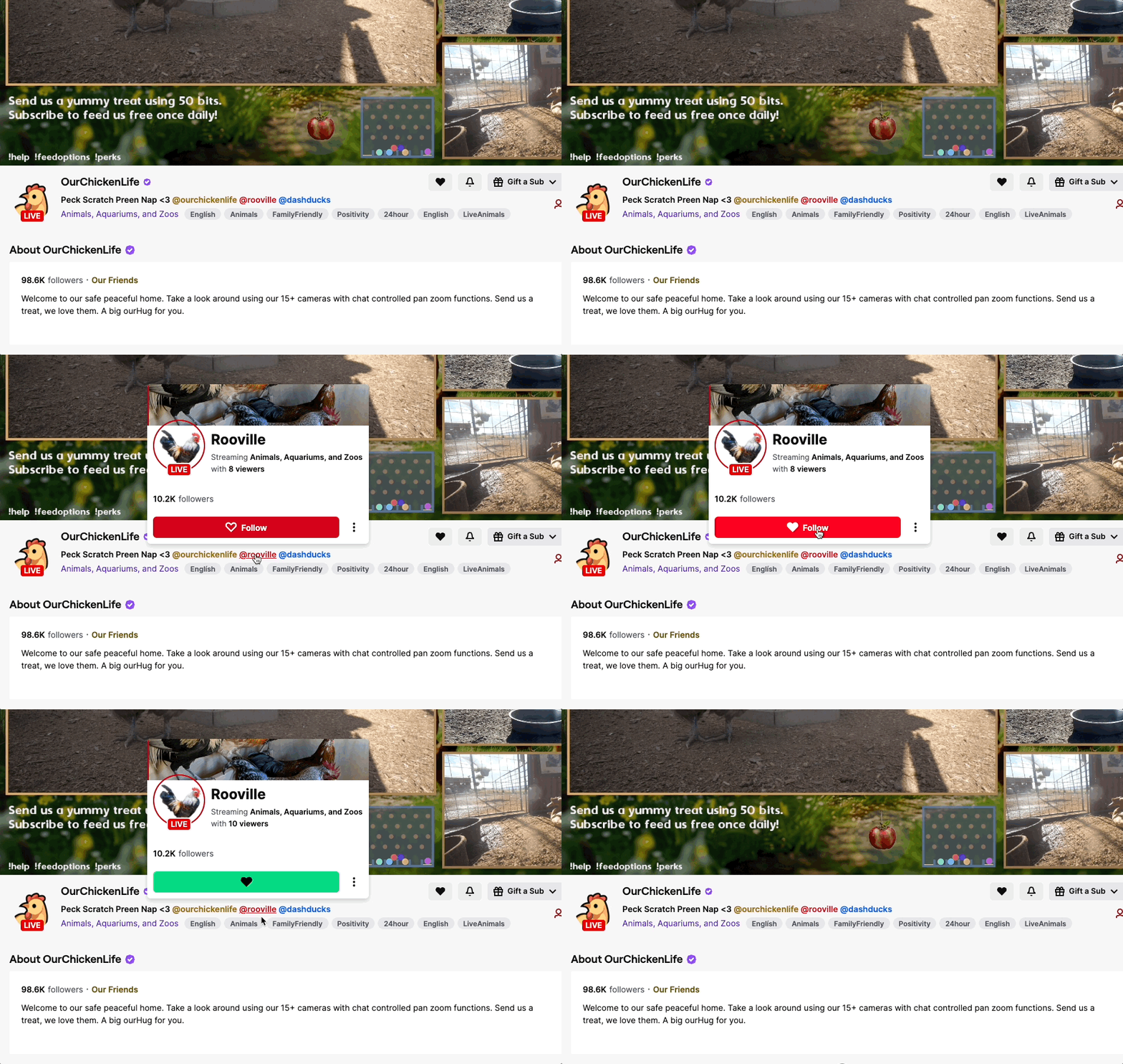
Animated demo of a viewer hovering a tagged channel name and revealing the channel hover card with a follow action.
Tagging another channel — the hover card in action

The response was overwhelmingly positive. Streamers immediately understood the value of being able to recommend other creators in a way that felt more integrated and professional than sharing links through chat. The concept aligned closely with how creators were already helping each other grow their communities.

Testing also helped refine the information shown within the hover card. Participants consistently wanted enough context to understand what a creator streamed, but not so much information that it distracted from the live broadcast. These sessions reinforced the importance of keeping the experience lightweight, glanceable, and easy to dismiss.

The feedback validated the core hypothesis behind the project: viewers were more willing to explore new creators when recommendations came from someone they already trusted and when they could evaluate those recommendations without leaving the stream.

Turning Trusted Recommendations into Discovery

Channel Tags launched as a simple addition to the Twitch viewing experience, but quickly became a popular tool for creators looking to support and recommend one another.

The feature aligned closely with existing streamer behavior, allowing creators to share recommendations in a way that felt native to the platform rather than relying on chat messages or external links. Because it enhanced a behavior that already existed, adoption was rapid and widespread.

Community response was overwhelmingly positive. Streamers embraced the feature as an easy way to promote fellow creators, while viewers appreciated having immediate access to the information they needed to evaluate recommendations without leaving the stream.

Key Takeaways

  • Discovery is most effective when recommendations come from trusted sources.
  • Small reductions in friction can have a meaningful impact on user behavior.
  • The best product opportunities often enhance existing behaviors rather than create new ones.

For me, this project reinforced the importance of observing how people already solve problems and designing solutions that support those behaviors in a more seamless and scalable way.

Next case study GaussIQ